
Stock code 688071


- 中文
- English

Gain insight into industry development trends
Stay updated with the latest company news
As embodied intelligence and humanoid robots enter the stage of large-scale algorithm-training deployment, high-quality, high-fidelity human demonstration data has become a core bottleneck constraining the capabilities of dexterous manipulation models. The data-collection hardware system for robot imitation learning is undergoing a clear generational technology shift: the current industry mainstream, represented by EGO first-person-view collection and handheld UMI (Universal Manipulation Interface) solutions, can rapidly accumulate data for basic grasping tasks; however, for high-order dexterous tasks such as fine assembly, bimanual coordination, and flexible-object interaction, existing devices have inherent shortcomings — missing hand-joint information and insufficient motion-reproduction fidelity — making it difficult to meet the data-precision standards required for training next-generation robot dexterous hands.
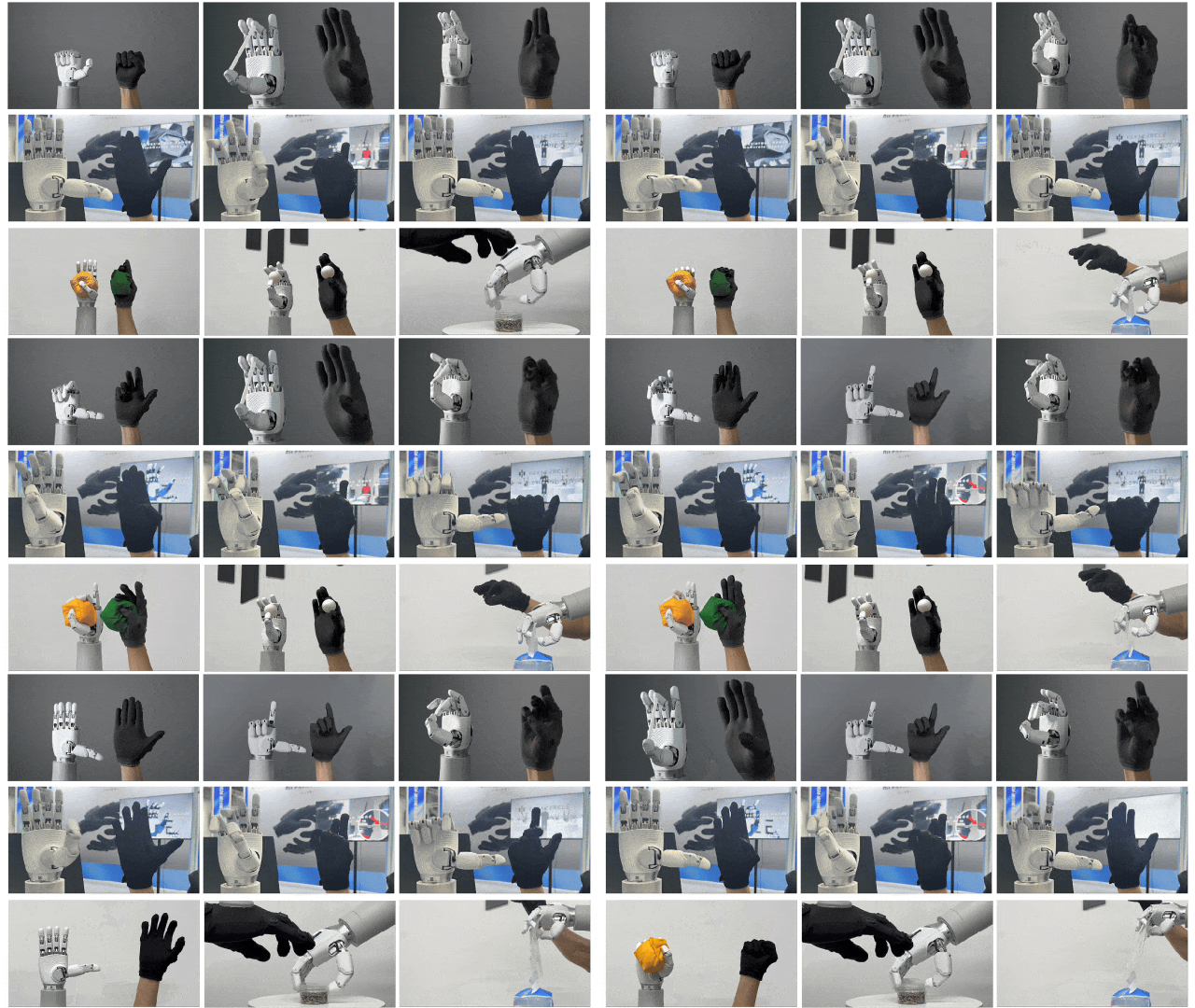
Image source: internet
Distributed-sensing data gloves will become the next-generation core hardware form for robot dexterous-manipulation data collection. As the core sensing carrier for hand posture and joint-motion information, the inertial measurement unit (IMU) will see its strategic value and per-device installation count rise significantly alongside this hardware iteration. Taking a baseline of 20 IMUs per dual-hand collection system, once data gloves achieve industrialized penetration, estimated demand for data gloves is expected to reach 20 million units, which would drive the release of 400 million units of IMU demand — opening up a huge incremental market worth tens of billions of RMB for robot data-collection-equipment IMUs in the future. W-ibeda, leveraging its self-developed, mass-production-capable automotive-grade IMU technology, has precisely positioned itself in the robot data-collection track. The company's high-performance IMU products, with advantages in high stability, low noise, and multi-node synchronization, are suited to distributed array collection schemes of 10 IMUs per glove and 20 IMUs for a pair of gloves, providing critical sensing support for the next generation of data gloves.
01 Existing Industry Data-Collection Solutions Face a Performance Ceiling
The currently widespread EGO and UMI-type data-collection devices are suited to simple manipulation scenarios dominated by parallel grippers: the EGO solution relies on head-mounted visual collection for first-person-view footage but lacks quantitative information about the hand's own motion; traditional UMI solutions mostly adopt a handheld-terminal form and can only collect end-effector gripper poses, unable to distinguish the independent motion of five fingers or the details of multi-joint coordination.
In the early stages of robot training, these solutions could satisfy the data supply for basic tasks. But when industry R&D goals shift toward humanoid dexterous hands and fine-manipulation scenarios, algorithms place higher demands on data granularity: models need to distinguish independent flexion/extension and lateral swing data for each finger's proximal and distal bone joints. Visual solutions are highly prone to occlusion and depth errors; single-point sensing devices cannot fully reproduce the motion trajectories of the human hand's twenty-plus degrees of freedom, and these data defects propagate continuously to the algorithm side, directly limiting the learning success rate of complex robot actions.
02 Distributed IMU Arrays: The Underlying Technological Cornerstone of Next-Generation Data Gloves
Facing the demand for high-precision dexterous-manipulation collection, cutting-edge industry solutions adopt a joint-distributed IMU layout architecture: inertial measurement units are deployed at key bone-joint positions of each finger, and through differential calculation of adjacent IMU postures, the real-time angles and motion speeds of each joint are precisely solved, fully reproducing the multi-degree-of-freedom motion information of the human hand.
Based on mature engineering solutions, a standardized high-precision collection glove adopts a distributed layout design: a single glove carries 10 IMUs, and a pair of gloves carries a total of 20 IMU sensing units. Compared with existing data-collection devices, the per-device sensor count achieves an order-of-magnitude increase.
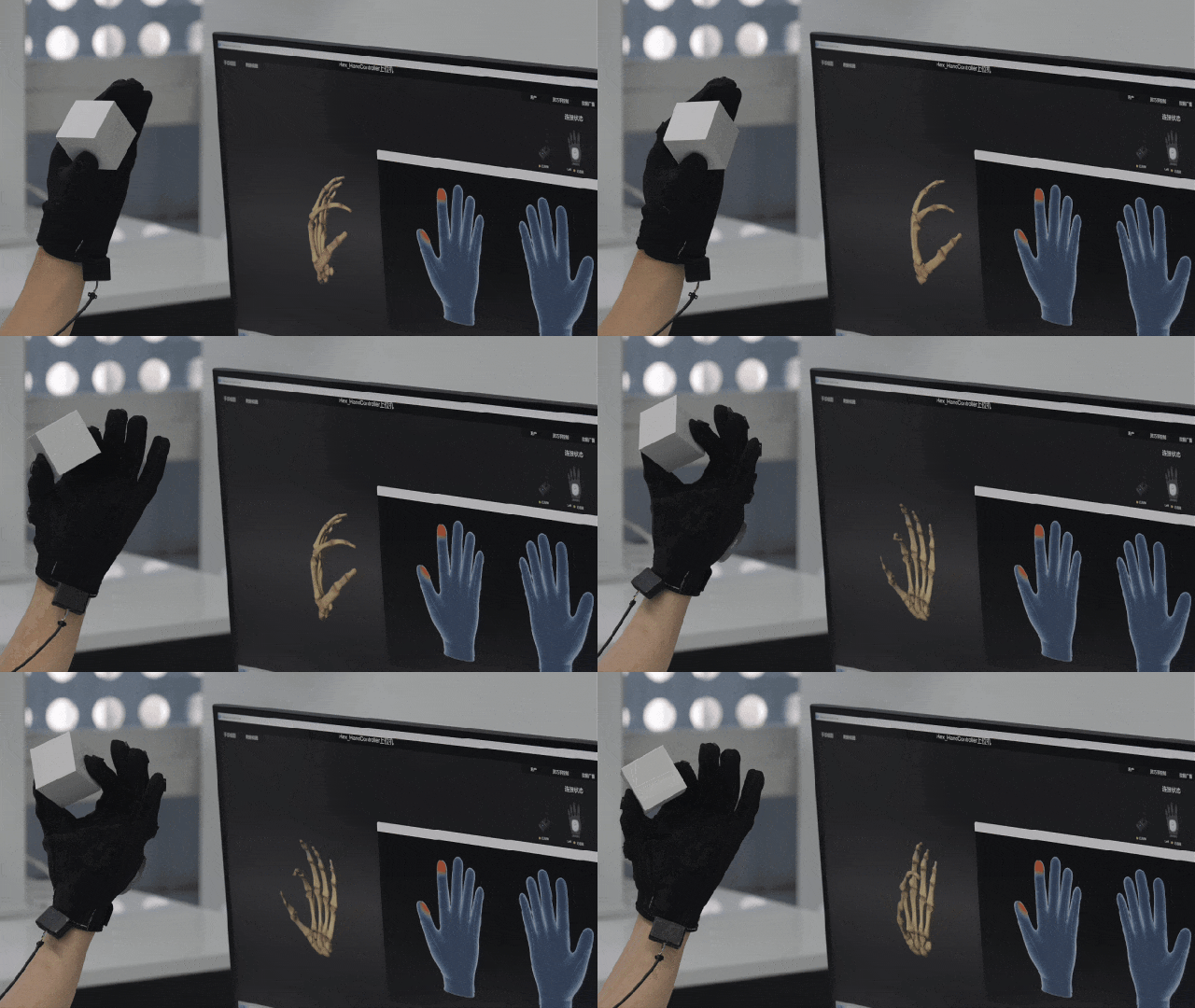
Image source: internet
? This architecture offers irreplaceable comprehensive advantages:
? Free from line-of-sight occlusion constraints: Unlike optical motion capture, IMU inertial sensing requires no cameras and has no viewing-distance limitations, supporting mobile data collection in various real indoor and outdoor scenarios and adapting to large-scale field data collection;
? Stronger motion-data continuity: With multi-node distributed deployment, it outputs complete finger-skeleton motion-chain data in real time, meeting the hard requirements of dexterous-hand imitation learning for time-series-continuous, high-precision joint data;
? Lightweight system, easy to scale and deploy: Relying on the mature micro-MEMS IMU industry chain, the glove can achieve lightweight wearability, suitable for long-duration, large-batch data-collection operations and supporting robot companies in building their own data production lines.
It must be made clear: no matter how the hardware structure is optimized or how supporting software algorithms iterate, the IMU remains the irreplaceable core hardware in the entire data-glove sensing chain. All raw hand-motion information is collected via IMUs, and the sensor's own noise, stability, and latency indicators directly determine the data ceiling of the entire collection device.
Competition in embodied intelligence is, at its core, competition in high-quality data; and data-collection hardware is precisely the key entry point of the robot-training industry chain. The industry is rapidly moving from traditional EGO and UMI solutions toward the era of high-precision data gloves, and the IMU, as the core sensing unit, is seeing a dual increase in both usage volume and value. As data gloves become an industry standard and distributed IMU sensing architectures continue to proliferate, W-ibeda will keep deepening its core inertial-sensing technologies, solidify the underlying hardware foundation for embodied-intelligence data collection, and drive technological breakthroughs and industrial deployment in the field of physical AI.

 Location: Home

 Online Consultation